
photo credit: http://www.grandforksherald.com
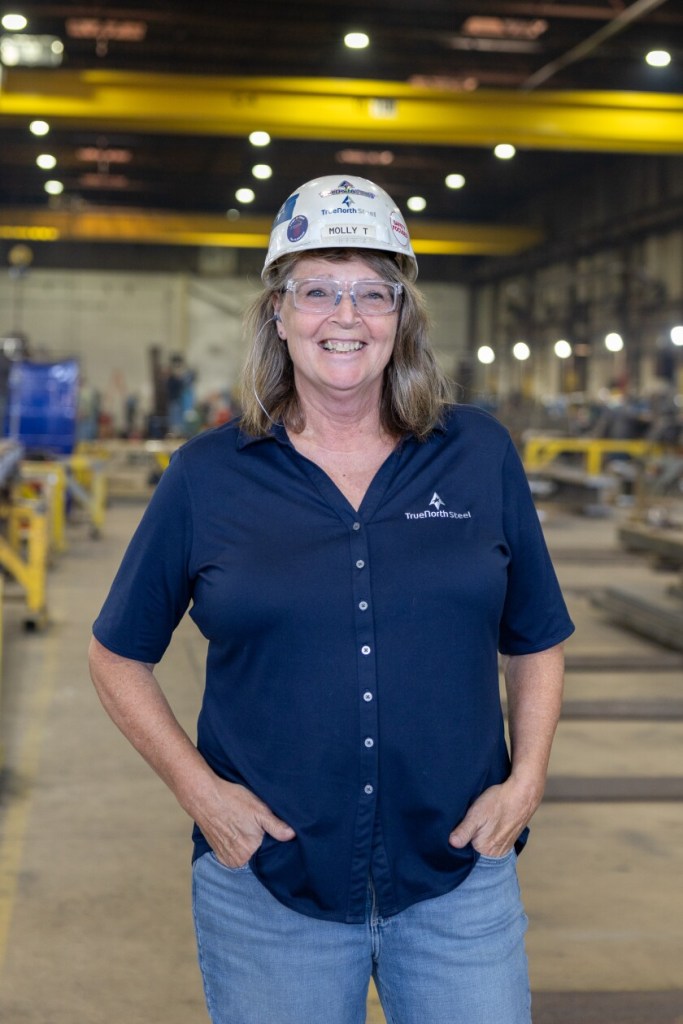
Molly Theis serves as Production Planner and Scheduler for TrueNorth Steel’s structural steel and bridge line in Fargo, where she plays a critical role in ensuring that large civic infrastructure projects—such as hospitals, airports, and schools—are completed with quality, reliability, and timely delivery.
Her path into manufacturing had early roots: inspired by her father, who worked as a sheet metal worker and foreman, she gained exposure to creation, construction, and the pride of building things. Her first roles in the industry involved operating drill presses, CNC machines, and working directly on the shop floor.
Over time, Molly leveraged her experience, technical skills, and insight into production to shift into planning and scheduling. Today, she not only manages processes and timelines but also takes personal pride in seeing projects completed—knowing she contributed to infrastructures that serve communities.
Key Lessons for Women in Manufacturing & Production
From Molly Theis’s story, several powerful lessons emerge—each of which can inspire women growing in production and manufacturing roles.
1. Start with Foundation Roles — They Build Credibility
Molly worked on the shop floor operating machines before moving into planning roles. These foundational experiences gave her understanding of the nuts and bolts of production—what works, what doesn’t, where inefficiencies may lie, and what challenges teams face every day. For many women, these entry or operational roles are not just stepping stones—they are vital training grounds for leadership.
Takeaway: Embrace early, hands-on roles. They inform decision-making later and earn respect from teams who know you understand the work.
2. Combine Technical Skill with Process Thinking
Operating machines, handling CNC work, and then moving into scheduling requires both technical competence and the mindset of process optimization. Molly merged these two: understanding technical details, then pushing for efficiency, quality, and reliability in delivery. Women in production who can both understand the technical and think in processes often stand out—because they see both the parts and the system.
Takeaway: Develop or maintain skills in both technical operation and planning. Seek training or mentorship in process management, scheduling, or logistics, not just hands-on work.
3. Take Pride in Building for Community
Molly’s satisfaction comes not just from completing a production schedule, but being part of projects that serve people—schools, hospitals, airports. That sense of purpose adds energy and meaning. For many women in manufacturing, seeing how your work directly impacts communities provides a powerful motivator—and it also strengthens leadership: people respond to purpose.
Takeaway: Anchor your work in purpose. Whether you’re on the floor or planning timelines, connecting what you do with how it benefits others (communities, customers, coworkers) makes your work matter and gives you strength when things get tough.
Final Thought
Molly Theis shows that leadership in manufacturing is often about growth within roles rather than jumping titles. What she has achieved—from operating machines to overseeing production planning—is a compelling blueprint for women who wish to build careers from the ground up.
If you are beginning in operational or shop floor roles: your work matters. If you are eyeing roles in scheduling, planning, or leadership: the knowledge you build today from hands-on tasks will be invaluable tomorrow. Keep learning, stay grounded in the process, and remember that your contributions help shape the communities around you.
 WOMEN IN MANUFACTURING AND PRODUCTION
Leave a comment